Magnetic Reprogramming of Macrophages Stimulates Phagocytosis of Breast Cancer Cells
Alfredo Franco-Obregón, an Associate Professor at the National University of Singapore and CABMM member, is the coauthor of a newly published open access article, Magnetic Reprogramming of Macrophages Stimulates Phagocytosis of Breast Cancer Cells via a TRPC1-STING Inflammatory Axis published in Smart Medicine. Link: https://onlinelibrary.wiley.com/doi/10.1002/smmd.70038.
CABMM asked Professor Alfredo Franco-Obregón what is novel about the method described in the publication. “Our approach, as it targets a metabolic signature associated with most cancers, is more precise in preferentially targeting cancer than other currently available methods. We employ a form of magnetism that can tune cellular metabolism based on this status. Healthy cells are able to compensate to the stimulus, whereas neighbouring cancer cells are pushed over the metabolic brink.
The PEMF platform utilized in this study has successfully concluded Phase 1b human safety trials. Leveraging this translational readiness, clinical preparations are underway for Phase 2 efficacy trials.
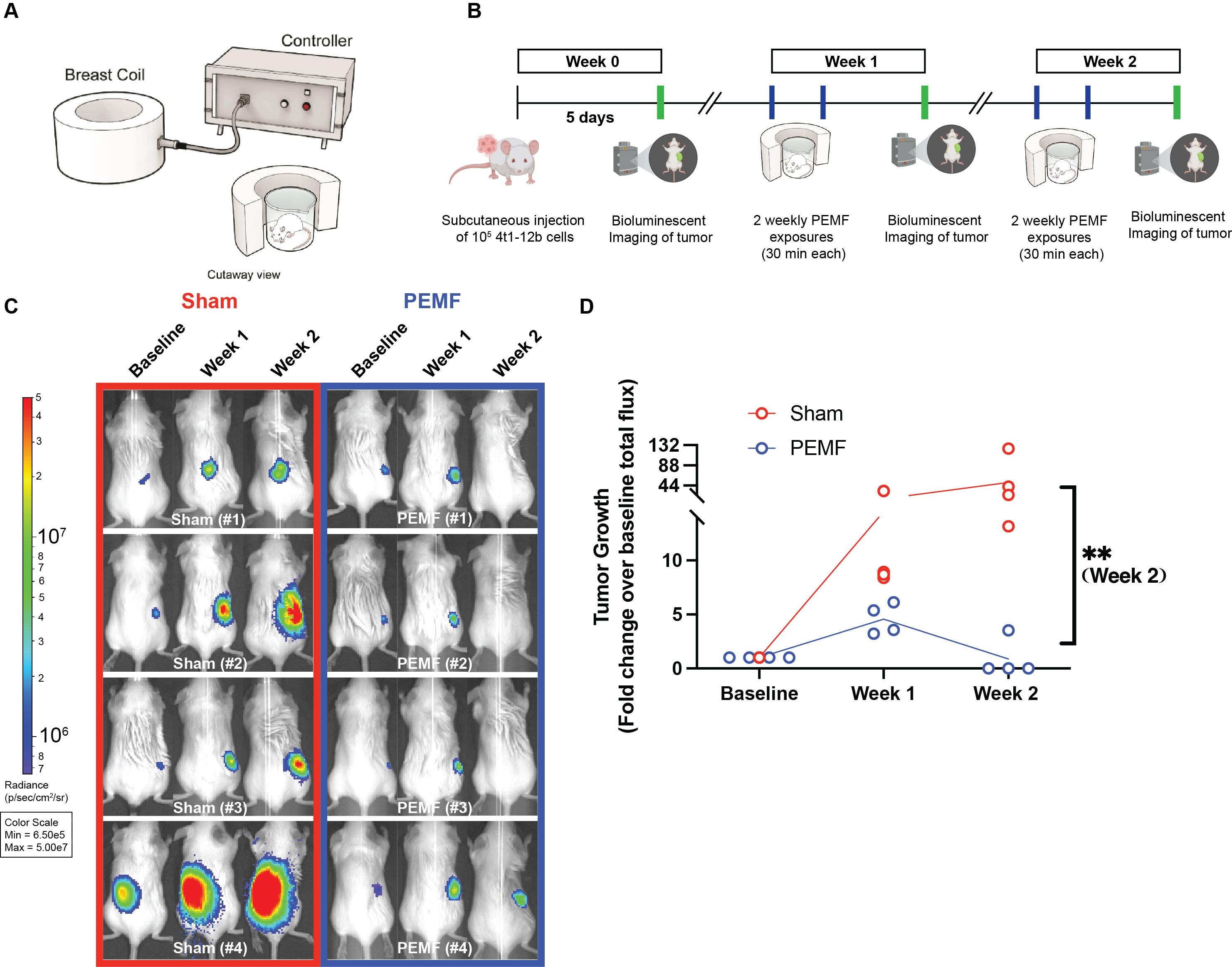
In parallel, our laboratory is actively exploring the capacity of this modality to potentiate established standard-of-care breast cancer regimens, specifically evaluating combinatorial synergy with chemotherapeutic agents (Doxorubicin) and immune checkpoint inhibitors (anti-PD-1).
We thank the Institute for Health Innovation & Technology; NUS Centre for Cancer Research (N2CR) and NUS Department of Surgery for supporting our work.”
About the article:
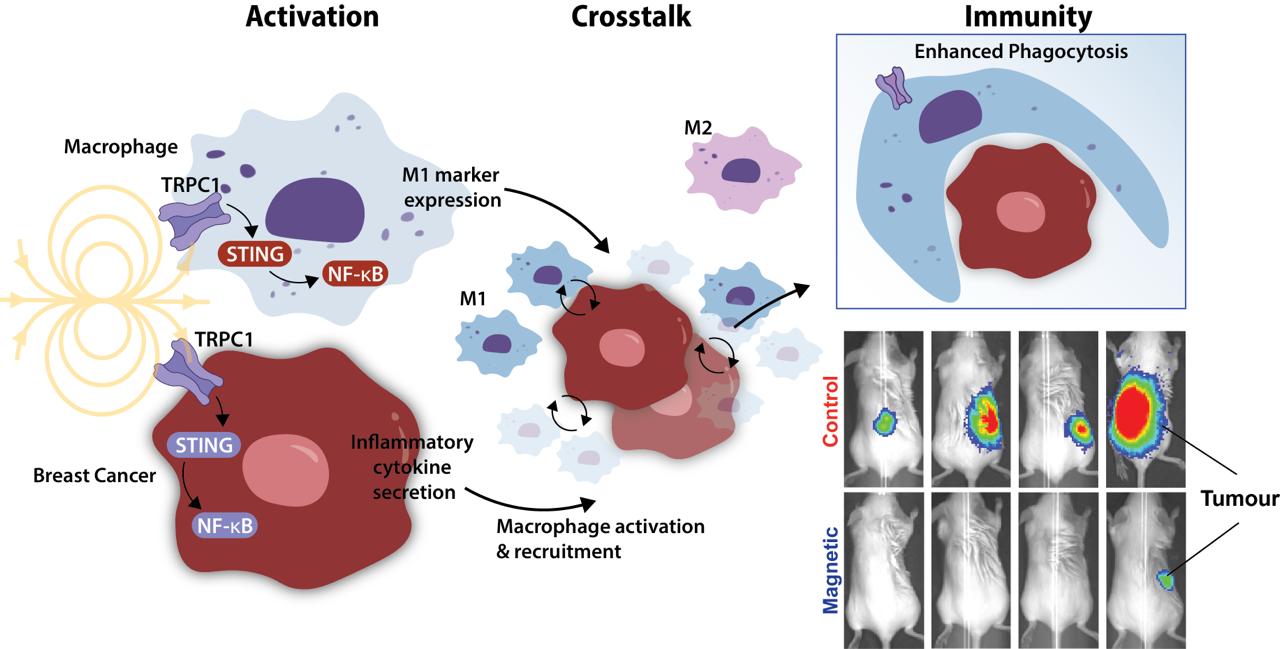
This manuscript highlights the potential of spatially targetable, non-invasive pulsed electromagnetic fields (PEMFs) to reprogramme the tumour microenvironment (TME). Beyond cancer cells, the TME is often enriched with immunosuppressive immune populations, many of which are driven into a tumour-supportive state through persistent cancer–immune crosstalk. This work demonstrates that PEMFs can activate a conserved TRPC1-STING inflammatory axis in both cancer cells and macrophages, shifting this interaction from a tumour-promoting dialogue towards one that supports tumour elimination.
Following PEMF exposure, macrophages become more inflammatory and better equipped for anti-tumour activity. Notably, PEMF-treated cancer cells selectively recruit these activated macrophages, leading to enhanced cancer-specific phagocytosis. As macrophages are key orchestrators of immune responses, this local rewiring of cancer-macrophage interactions further promotes broader immune activation within the tumour, including increased engagement of natural killer cells and cytotoxic T cells, ultimately contributing to effective tumour clearance in mice.
Current immunotherapies, including immune checkpoint inhibitors, have transformed cancer treatment but remain limited by systemic administration, off-target toxicities, and variable efficacy in tumours with low immune infiltration. PEMF-based immunomodulation offers a complementary strategy by enabling spatial control of immune activation without requiring systemic drug delivery. Furthermore, the enhanced recruitment of immune cells into PEMF treated tumours suggests that this approach may have potential across tumours with differing baseline levels of immune infiltration.
Collectively, this study positions PEMFs as a promising next-generation immunomodulatory modality. By simultaneously reprogramming immune cells and reshaping cancer-immune crosstalk, PEMFs offer a double-pronged strategy to activate anti-tumour immunity with high precision and minimal toxicity.
We congratulate Alfredo Franco-Obregón and his coauthors on the publication of their article and give the final word to two of his collaborators.
“This work is particularly exciting as immune modulation through a modality with spatial precision is rare and can address many of the practical challenges with cancer immunotherapy in clinics.” Viresh Krishnan Sukumar
"For decades, oncology has treated the immunosuppressive 'cold' tumor microenvironment as an intractable barrier to immunotherapy. By directly orchestrating a precise macrophage-cancer crosstalk, we are shifting the paradigm entirely. We are no longer merely hoping the immune system happens to recognize the cancer; we are biophysically programming it to attack." Alex Yee Kit Tai
Read the article here: https://onlinelibrary.wiley.com/doi/10.1002/smmd.70038.